
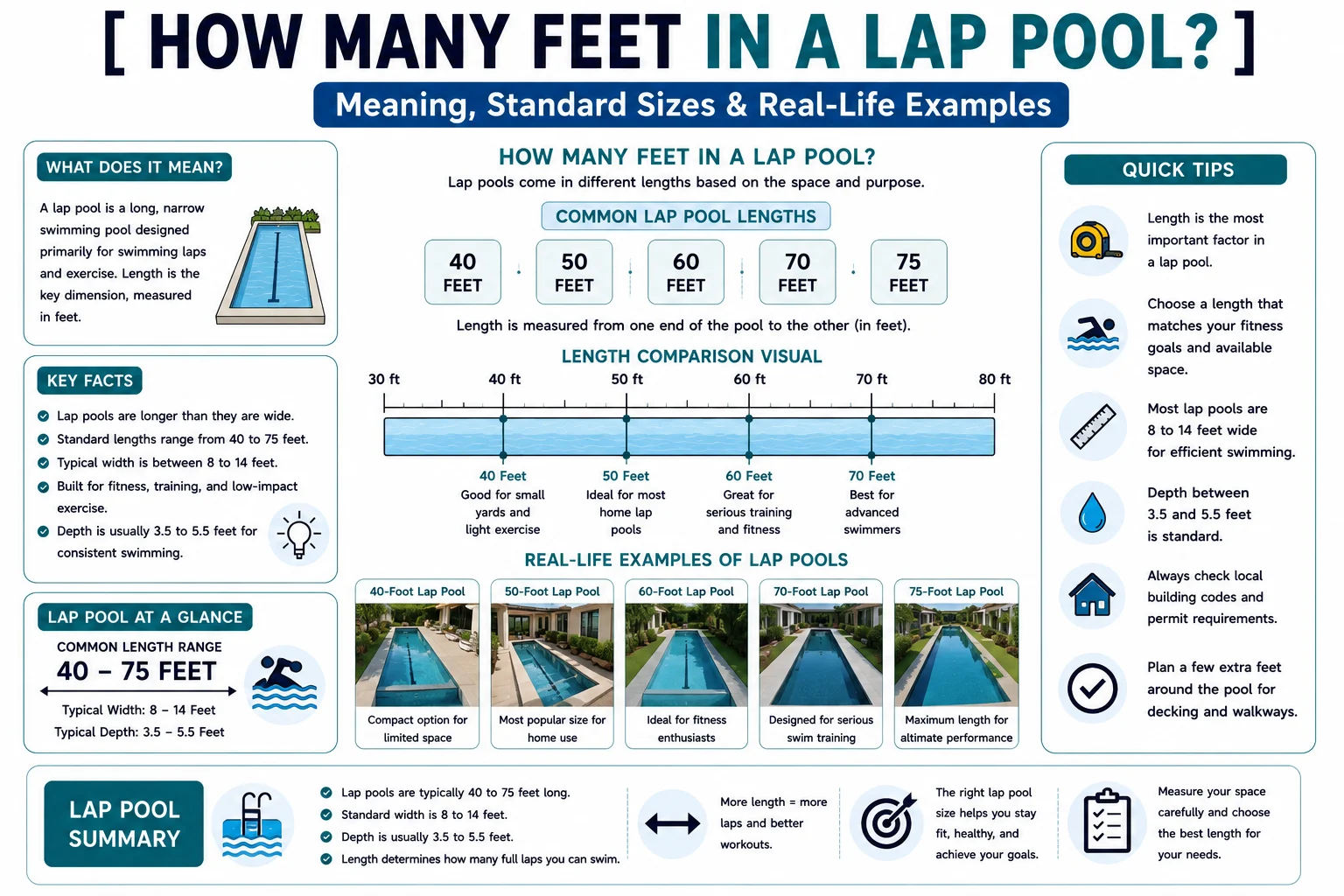
If you’re wondering how many feet in a lap pool, the answer depends on whether the pool is designed for recreational swimming, fitness training, or competitive use. While there is no single size that defines every lap pool, most lap pools are built long and narrow to allow uninterrupted swimming.
In general, a typical residential lap pool ranges from 40 to 75 feet long, while competition pools are often 82 feet (25 meters) or 164 feet (50 meters) in length. Understanding lap pool dimensions helps homeowners, swimmers, and builders choose the right design for exercise, training, and available space.
Whether you’re considering a backyard lap pool or simply curious about swimming pool measurements, this guide explains everything you need to know.
Quick Answer
The most common lap pool lengths are:
| Pool Type | Length |
|---|---|
| Small Residential Lap Pool | 30–40 feet |
| Standard Residential Lap Pool | 40–75 feet |
| Short Course Competition Pool | 82 feet (25 meters) |
| Olympic Pool | 164 feet (50 meters) |
For most homeowners, a lap pool between 40 and 75 feet long provides enough room for effective swimming workouts.
What Is a Lap Pool?
A lap pool is a swimming pool specifically designed for continuous swimming and exercise.
Unlike traditional recreational pools that focus on play and relaxation, lap pools prioritize:
- Fitness training
- Endurance swimming
- Low-impact exercise
- Cardiovascular workouts
- Rehabilitation and therapy
Lap pools are typically:
- Long
- Narrow
- Rectangular
- Uniform in depth
Their streamlined design allows swimmers to perform laps without frequent turns.
How Many Feet in a Lap Pool? Standard Lengths Explained
The phrase how many feet in a lap pool usually refers to the pool’s length.
There are several common standards.
30-Foot Lap Pools
These are compact pools suitable for:
- Small backyards
- Limited property space
- Casual exercise
Although shorter than standard lap pools, they still allow swimmers to complete effective workouts.
40-Foot Lap Pools
A 40-foot pool is one of the most popular residential choices.
Benefits include:
- Affordable construction
- Easier maintenance
- Adequate swimming distance
- Fits most suburban lots
50-Foot Lap Pools
Many fitness-focused homeowners choose 50-foot pools because they provide:
- Longer swim intervals
- Fewer turns
- Better endurance training
75-Foot Lap Pools
These larger pools offer a near-commercial swimming experience and are ideal for serious swimmers.
Residential vs Commercial Lap Pools
Pool size often depends on intended use.
Residential Lap Pools
Most home lap pools measure:
- Length: 40–75 feet
- Width: 8–12 feet
These dimensions balance functionality with available yard space.
Commercial Lap Pools
Commercial and athletic facilities usually build larger pools.
Typical sizes include:
| Facility Type | Length |
|---|---|
| Fitness Center | 75–82 feet |
| Community Pool | 82 feet |
| Olympic Facility | 164 feet |
Commercial pools support multiple swimmers simultaneously.
Common Lap Pool Dimensions
Length is only part of the equation.
A properly designed lap pool also requires adequate width and depth.
Typical Residential Dimensions
| Measurement | Range |
|---|---|
| Length | 40–75 feet |
| Width | 8–12 feet |
| Depth | 3.5–6 feet |
Fitness-Oriented Dimensions
For dedicated training pools:
| Measurement | Recommended Size |
|---|---|
| Length | 50–75 feet |
| Width | 10–12 feet |
| Depth | 4–5 feet |
These proportions create comfortable swimming conditions.
Olympic Pool Measurements Compared
Many people compare lap pools to Olympic swimming pools.
An Olympic pool measures:
- 50 meters long
- Approximately 164 feet long
- 82 feet wide
Olympic pools contain multiple swimming lanes and accommodate international competitions.
Comparison Table
| Pool Type | Length |
|---|---|
| Small Lap Pool | 30–40 feet |
| Residential Lap Pool | 40–75 feet |
| Short Course Pool | 82 feet |
| Olympic Pool | 164 feet |
This comparison helps homeowners understand how much smaller residential lap pools typically are.
How to Choose the Right Lap Pool Length
Several factors determine the ideal pool length.
Available Space
The size of your property is often the biggest limitation.
Measure carefully before selecting a design.
Fitness Goals
For casual exercise:
- 30–40 feet may be sufficient.
For serious training:
- 50–75 feet is preferable.
Budget
Longer pools require:
- More excavation
- More materials
- Higher maintenance costs
Intended Users
Consider whether the pool will be used by:
- Adults
- Children
- Competitive swimmers
- Multiple family members
Your usage goals should influence dimensions.
Benefits of Lap Pools
Lap pools offer many advantages compared with traditional recreational pools.
Excellent Exercise Option
Swimming provides:
- Cardiovascular benefits
- Strength training
- Improved endurance
Low-Impact Workouts
Swimming reduces stress on:
- Joints
- Knees
- Hips
This makes lap pools ideal for older adults and rehabilitation programs.
Space Efficiency
Their narrow shape fits many backyards better than freeform pools.
Easier Maintenance
Because lap pools often have simpler designs, cleaning and maintenance can be more straightforward.
Common Mistakes When Planning a Lap Pool
Many homeowners regret certain design choices.
Choosing a Pool That’s Too Short
Short pools require frequent turns, which can interrupt workouts.
Ignoring Width Requirements
A narrow pool may feel restrictive.
Overlooking Depth
Pools that are too shallow or too deep can reduce comfort.
Not Planning Future Needs
Consider long-term fitness goals before construction begins.
Poor Placement
Sun exposure, landscaping, and accessibility all affect usability.
Cost Considerations Based on Pool Size
Pool length directly impacts cost.
Small Lap Pools (30–40 Feet)
Typically cost less due to:
- Reduced excavation
- Lower material requirements
- Smaller filtration systems
Medium Lap Pools (40–60 Feet)
Offer a balance between functionality and budget.
Large Lap Pools (60–75 Feet)
Generally cost significantly more but provide a superior swimming experience.
Additional factors include:
- Heating systems
- Decking
- Lighting
- Automation
- Landscaping
Real-World Examples of Lap Pool Sizes
Urban Backyard
A homeowner with limited space installs:
- 40-foot pool
- 8-foot width
This allows daily exercise while preserving yard space.
Luxury Residence
A larger property accommodates:
- 75-foot lap pool
- 12-foot width
Ideal for serious swimmers.
Fitness Facility
A health club builds:
- 82-foot pool
- Multiple lanes
Suitable for member training and swimming lessons.
These examples demonstrate the versatility of lap pool designs.
Expert Tips for Lap Pool Design
Prioritize Length Over Width
For swimming workouts, extra length generally provides more value.
Maintain Consistent Depth
Uniform depth improves comfort and swimming efficiency.
Install Quality Filtration
Good water circulation supports cleanliness and swimmer health.
Consider Swim Jets
If space is limited, swim jets can simulate endless swimming.
Plan for Safety
Include:
- Non-slip surfaces
- Proper lighting
- Easy entry points
Thoughtful planning ensures a better long-term experience.
Conclusion
If you’re asking how many feet in a lap pool, the answer depends on the pool’s intended purpose. Most residential lap pools range from 40 to 75 feet long, while competition pools measure approximately 82 feet or even 164 feet for Olympic events.
Choosing the right lap pool involves balancing available space, budget, fitness goals, and long-term needs. Whether you’re building a compact backyard exercise pool or designing a serious training facility, understanding standard lap pool dimensions helps ensure the best results.
A properly sized lap pool can provide years of fitness, enjoyment, and value while supporting an active and healthy lifestyle.
FAQs
How many feet long is a standard lap pool?
Most residential lap pools are between 40 and 75 feet long.
What is the minimum length for a lap pool?
Many experts recommend at least 30 feet for effective lap swimming.
How long is an Olympic lap pool?
An Olympic swimming pool is 50 meters, or approximately 164 feet, long.
Is a 40-foot pool good for lap swimming?
Yes. A 40-foot pool is a popular residential option that provides sufficient space for regular exercise.
What width should a lap pool be?
Most residential lap pools are between 8 and 12 feet wide, allowing comfortable swimming while maximizing available space.
More Searches Here
How Many Feet of Intestines Do Dogs Have?
How Many Feet in an Acre?