

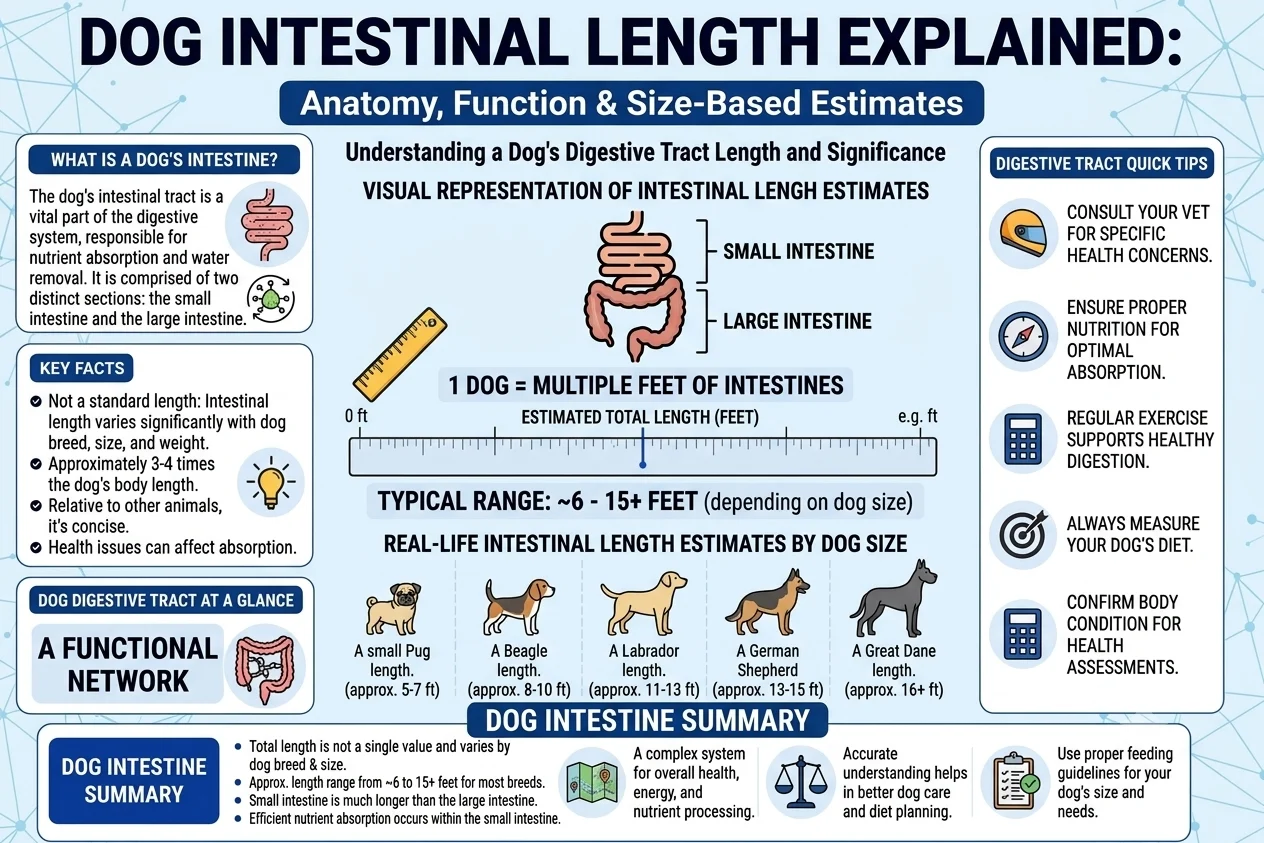
If you’ve ever wondered how many feet of intestines do dogs have, the answer may surprise you. Even though dogs come in many sizes, from tiny Chihuahuas to giant Great Danes, they all rely on a remarkably efficient digestive system. A dog’s intestines are much longer than they appear because they are tightly coiled inside the abdomen.
On average, most dogs have between 10 and 25 feet of intestines, depending on their size, breed, age, and body weight. The majority of this length comes from the small intestine, which is responsible for digesting food and absorbing nutrients.
Understanding the length and function of a dog’s intestines can help pet owners better appreciate how digestion works and why digestive health is so important for their canine companions.
Quick Answer
The average dog has:
| Digestive Part | Approximate Length |
|---|---|
| Small Intestine | 8–22 feet |
| Large Intestine | 1–3 feet |
| Total Intestinal Length | 10–25 feet |
In general:
- Small dogs may have 10–15 feet of intestines.
- Medium dogs often have 15–20 feet.
- Large dogs can have 20–25 feet or more.
So, when asking how many feet of intestines do dogs have, the average answer is approximately 10 to 25 feet.
Understanding the Dog Digestive System
A dog’s digestive system is designed to process food efficiently and extract nutrients needed for energy, growth, and overall health.
The digestive tract includes:
- Mouth
- Esophagus
- Stomach
- Small intestine
- Large intestine
- Rectum
- Anus
Although the stomach receives much attention, most digestion and nutrient absorption occur within the intestines.
The intestines act like a long processing system where food is broken down into usable nutrients before waste is eliminated.
How Many Feet of Intestines Do Dogs Have on Average?
The total intestinal length varies based on the dog’s body size.
Small Dogs
Examples:
- Chihuahua
- Yorkshire Terrier
- Pomeranian
Typical intestinal length:
- 10–15 feet
Medium Dogs
Examples:
- Beagle
- Border Collie
- Bulldog
Typical intestinal length:
- 15–20 feet
Large Dogs
Examples:
- German Shepherd
- Labrador Retriever
- Golden Retriever
Typical intestinal length:
- 20–25 feet
Giant Breeds
Examples:
- Great Dane
- Saint Bernard
- Mastiff
Typical intestinal length:
- 25 feet or more
Despite these differences, all dogs maintain similar digestive functions regardless of breed.
Small Intestine vs Large Intestine in Dogs
The intestine consists of two major sections.
Small Intestine
The small intestine is the longest portion.
Functions include:
- Digesting proteins
- Breaking down fats
- Processing carbohydrates
- Absorbing nutrients
- Absorbing vitamins and minerals
The small intestine generally accounts for 80–90% of total intestinal length.
Large Intestine
The large intestine is much shorter.
Its primary responsibilities include:
- Absorbing water
- Forming stool
- Storing waste before elimination
Although shorter, it plays a crucial role in digestive health.
Comparison Table
| Feature | Small Intestine | Large Intestine |
|---|---|---|
| Length | Longer | Shorter |
| Function | Nutrient absorption | Water absorption |
| Digestion | Extensive | Minimal |
| Structure | Narrow | Wider |
Why Dogs Need Long Intestines
Many pet owners wonder why dogs require such lengthy intestines.
The answer lies in nutrient absorption.
Food needs sufficient time to travel through the digestive tract so nutrients can be extracted efficiently.
Long intestines help dogs:
- Absorb proteins
- Utilize fats
- Process carbohydrates
- Extract vitamins
- Absorb minerals
Without enough intestinal length, valuable nutrients would pass through the body unused.
Intestinal Length by Dog Size and Breed
Body size has a direct effect on intestinal length.
Toy Breeds
These dogs have smaller digestive systems but still maintain impressive intestinal lengths relative to body size.
Sporting Breeds
Active breeds often possess efficient digestive systems designed to support high energy needs.
Working Dogs
Large working breeds may have longer intestines to process greater food intake.
Giant Breeds
Some giant breeds have digestive tracts exceeding 25 feet in total length.
However, longer intestines do not necessarily mean better digestion. Efficiency depends on overall digestive health.
How Dog Intestines Compare to Humans
Dogs and humans share many digestive similarities.
However, there are important differences.
Average Human Intestinal Length
Humans typically have:
- Small intestine: about 20 feet
- Large intestine: about 5 feet
Total:
- Approximately 25 feet
Average Dog Intestinal Length
Most dogs have:
- 10–25 feet total
Comparison Table
| Species | Average Intestinal Length |
|---|---|
| Small Dog | 10–15 feet |
| Medium Dog | 15–20 feet |
| Large Dog | 20–25 feet |
| Human | Around 25 feet |
Interestingly, some large dogs possess intestinal lengths approaching those of humans despite their different body structures.
The Journey of Food Through a Dog’s Body
Understanding digestion helps explain why intestines are so important.
Step 1: Eating
Food enters through the mouth and is chewed.
Step 2: Stomach Processing
The stomach uses acids and enzymes to begin digestion.
Step 3: Small Intestine
This is where most nutrient absorption occurs.
Proteins, fats, and carbohydrates are broken into smaller components.
Step 4: Large Intestine
Water is absorbed and waste material is prepared for elimination.
Step 5: Elimination
The body removes indigestible materials through bowel movements.
This entire process may take anywhere from several hours to more than a day depending on diet and individual factors.
Common Digestive Problems in Dogs
The intestines can experience various health issues.
Intestinal Blockages
Foreign objects can become lodged in the digestive tract.
Common examples include:
- Toys
- Bones
- Socks
- Plastic items
Inflammatory Bowel Disease
This condition causes chronic inflammation in the intestines.
Parasites
Worms may affect nutrient absorption and overall health.
Food Intolerances
Certain foods may irritate the digestive system.
Diarrhea
Often results from infections, dietary changes, or stress.
Veterinary care is important whenever serious digestive symptoms appear.
Tips for Keeping Your Dog’s Digestive System Healthy
Maintaining intestinal health helps support overall well-being.
Feed High-Quality Food
Choose balanced diets that meet nutritional requirements.
Provide Fresh Water
Hydration supports proper digestion.
Avoid Sudden Diet Changes
Gradual transitions reduce digestive upset.
Exercise Regularly
Physical activity supports healthy intestinal movement.
Schedule Veterinary Checkups
Routine examinations can identify digestive problems early.
Prevent Foreign Object Ingestion
Keep small objects out of reach.
These simple practices can help maintain a healthy digestive tract throughout your dog’s life.
Interesting Facts About Dog Intestines
Dogs possess several fascinating digestive traits.
- Their intestines are tightly folded to fit inside the abdomen.
- The small intestine performs most nutrient absorption.
- Digestive enzymes help break down food efficiently.
- Puppies have shorter intestines than adult dogs.
- Intestinal bacteria play an important role in overall health.
- Dogs digest food differently than humans.
- Large breeds generally have longer digestive tracts.
These adaptations help dogs thrive on a variety of diets.
Conclusion
If you’re asking how many feet of intestines do dogs have, the answer depends on the dog’s size and breed. Most dogs possess between 10 and 25 feet of intestines, with the small intestine accounting for the majority of that length.
These lengthy, coiled digestive organs are essential for nutrient absorption, energy production, and overall health. From tiny toy breeds to giant working dogs, every canine relies on a sophisticated digestive system to process food efficiently.
Understanding the structure and function of dog intestines helps pet owners appreciate the remarkable biology that keeps their furry companions healthy and active.
FAQs
How many feet of intestines does the average dog have?
Most dogs have approximately 10 to 25 feet of intestines, depending on their size and breed.
Which part of a dog’s intestine is the longest?
The small intestine is the longest section and typically accounts for most of the digestive tract’s length.
Do larger dogs have longer intestines?
Yes. Larger breeds generally have longer intestines than smaller breeds.
How do dog intestines compare to human intestines?
Large dogs may have intestinal lengths approaching those of humans, which average around 25 feet.
Why are dog intestines so long?
Long intestines provide enough surface area and time for efficient nutrient absorption and digestion.
Discover More
130 Feet Is How Many Stories?
How Many Square Feet in a Bundle of Cedar Shingles?
How Many Square Feet Is One Cent?