
If you are shopping for a heater, mini split, fireplace, or air conditioner, you may wonder: how many square feet will 17000 BTU heat?
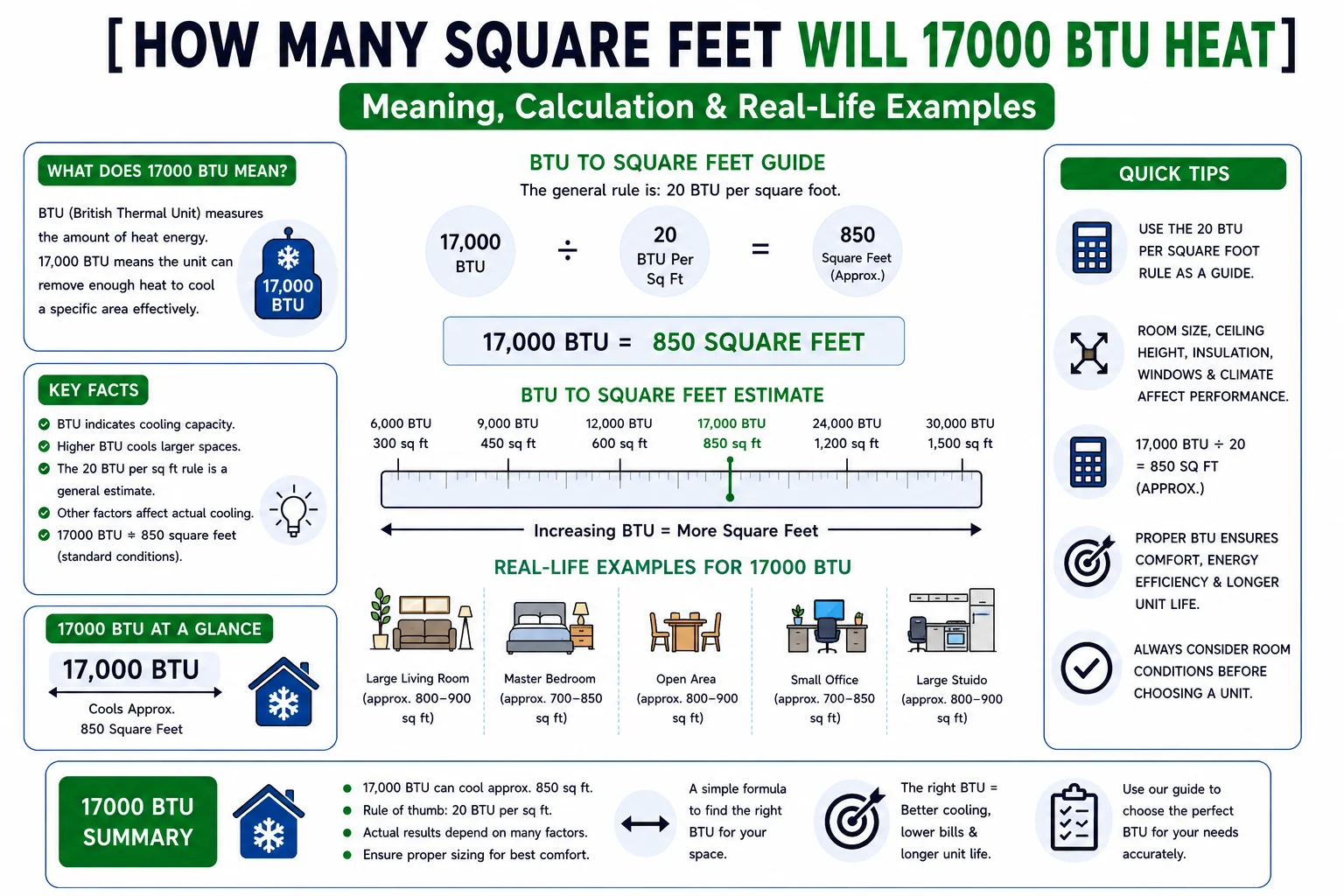
In most cases, a 17000 BTU heater can heat around 700 to 850 square feet under normal conditions. However, the exact coverage depends on several factors, including insulation, climate, ceiling height, and whether the unit is used for heating or cooling.
Choosing the correct BTU size matters more than many people realize. A unit that is too small will struggle to maintain a comfortable temperature. On the other hand, an oversized unit can waste energy and increase utility bills.
This guide explains exactly what a 17000 BTU unit can handle, how BTUs work, and how to calculate the best heating capacity for your space.
What Does BTU Mean?
BTU stands for British Thermal Unit. It measures how much heat a heating or cooling system can produce.
In simple terms:
- Higher BTU = more heating or cooling power
- Lower BTU = smaller coverage area
HVAC systems, portable heaters, mini splits, fireplaces, and air conditioners all use BTUs to show their capacity.
For heating, one BTU is the amount of energy needed to raise the temperature of one pound of water by 1 degree Fahrenheit.
While that definition sounds technical, the important thing for homeowners is this:
BTUs help determine how large of a room a heater or AC can comfortably handle.
How Many Square Feet Can 17000 BTU Heat?
A 17000 BTU heater typically covers:
| Insulation Quality | Estimated Coverage |
|---|---|
| Excellent insulation | 850–950 sq ft |
| Average insulation | 700–850 sq ft |
| Poor insulation | 500–700 sq ft |
Most HVAC professionals use a rough estimate of 20 to 30 BTUs per square foot for heating.
Using that formula:
- 17,000 ÷ 20 = 850 sq ft
- 17,000 ÷ 25 = 680 sq ft
- 17,000 ÷ 30 = 566 sq ft
That is why the average recommendation falls around 700–850 square feet.
Standard Coverage Estimate
For a standard home with:
- 8-foot ceilings
- Average insulation
- Moderate climate
- Typical window placement
A 17000 BTU system should comfortably heat:
- Large living rooms
- Studio apartments
- Small cabins
- Garages
- RVs
- Open office spaces
Quick BTU-to-Square-Foot Chart
| BTU Size | Approximate Coverage |
|---|---|
| 5,000 BTU | 150–250 sq ft |
| 8,000 BTU | 300–350 sq ft |
| 12,000 BTU | 450–550 sq ft |
| 17,000 BTU | 700–850 sq ft |
| 24,000 BTU | 1,000–1,400 sq ft |
| 36,000 BTU | 1,500–2,000 sq ft |
These numbers are estimates, not guarantees. Real-world conditions matter.
Factors That Affect 17000 BTU Heating Coverage
Not every room heats the same way. Several conditions can increase or reduce how much space a 17000 BTU unit can handle.
Insulation Quality
Insulation plays one of the biggest roles in heating efficiency.
A well-insulated home keeps warm air inside longer, allowing the heater to work less.
Good insulation includes:
- Insulated walls
- Double-pane windows
- Sealed doors
- Proper attic insulation
Poor insulation can reduce effective heating coverage by hundreds of square feet.
Climate and Outdoor Temperature
Climate matters more than many buyers expect.
For example:
- A 17000 BTU heater may heat 850 sq ft in a mild climate
- The same heater may only manage 600 sq ft in extremely cold regions
Homes in colder northern areas usually require higher BTU ratings.
Ceiling Height
Standard BTU estimates assume 8-foot ceilings.
If your room has:
- Vaulted ceilings
- Cathedral ceilings
- Loft-style layouts
You will need more heating power because there is more air volume to warm.
For ceilings above 8 feet, HVAC experts often increase BTU needs by 10–20%.
Sunlight and Windows
Large windows can affect room temperature in both good and bad ways.
South-facing windows may help warm a room during the day, while older windows can leak heat during winter.
Too many windows can lower heating efficiency significantly.
Room Layout
Open floor plans require more BTUs than closed rooms.
For example:
- One enclosed 700 sq ft room is easier to heat
- A 700 sq ft open-concept area loses heat faster
Hallways, staircases, and connected rooms also impact performance.
Is 17000 BTU Good for Cooling Too?
Yes. A 17000 BTU air conditioner or mini split can also cool roughly 700–1,000 square feet, depending on conditions.
Cooling estimates are usually slightly higher than heating estimates because removing heat is often easier than generating it.
Air Conditioner Coverage
A 17000 BTU AC unit works well for:
- Large bedrooms
- Apartments
- Living rooms
- Small offices
- Mobile homes
However, hot climates may reduce cooling efficiency.
Mini Split Applications
Mini split systems with 17000 BTU capacity are popular because they are:
- Energy efficient
- Quiet
- Easy to install
- Great for zoned heating and cooling
Many homeowners use them for:
- Garages
- Basements
- Sunrooms
- Additions
- Workshops
How to Calculate the Right BTU Size for Your Space
You can estimate your heating needs with a simple formula.
Basic Formula
Most homes need:
- 20–30 BTUs per square foot
Use this equation:
Square footage × BTUs needed per square foot = Required BTUs
Real-World Example
Imagine you have a 750 sq ft room.
Using 25 BTUs per square foot:
750 × 25 = 18,750 BTUs
In this situation, a 17000 BTU heater may work if:
- Insulation is good
- Climate is moderate
- Ceiling height is standard
Otherwise, you may need a slightly larger unit.
Best Uses for a 17000 BTU Heater or AC
A 17000 BTU system is ideal for medium-to-large spaces.
Common uses include:
Residential Spaces
- Apartments
- Living rooms
- Open kitchens
- Master bedrooms
- Finished basements
Commercial Spaces
- Small offices
- Retail shops
- Waiting rooms
- Studios
Specialty Spaces
- Garages
- Workshops
- RVs
- Cabins
- Tiny homes
It is a versatile size that balances efficiency and coverage.
Common Mistakes When Choosing BTU Size
Many people choose the wrong heater size because they only look at square footage.
Here are the most common mistakes.
Ignoring Insulation
Two homes with the same square footage can require very different BTU levels.
Older homes usually need more heating power.
Buying Oversized Units
Bigger is not always better.
Oversized systems may:
- Waste energy
- Cycle on and off too often
- Reduce humidity control
- Increase operating costs
Forgetting Ceiling Height
Large vertical spaces need additional heating capacity.
Always consider room volume, not just floor size.
Not Accounting for Climate
Cold regions require more BTUs.
A heater sized for Texas may struggle in Minnesota or Canada.
Ignoring Sun Exposure
Rooms with large windows or direct sunlight can change heating and cooling requirements.
17000 BTU Compared to Other Heater Sizes
| BTU Rating | Typical Coverage | Best For |
|---|---|---|
| 10,000 BTU | 350–450 sq ft | Bedrooms |
| 12,000 BTU | 450–550 sq ft | Small apartments |
| 17,000 BTU | 700–850 sq ft | Living areas |
| 24,000 BTU | 1,000–1,400 sq ft | Large homes |
| 30,000+ BTU | 1,500+ sq ft | Whole-house heating |
A 17000 BTU unit fits nicely in the middle range.
It provides more power than small portable systems without becoming overly expensive.
Energy Efficiency Tips for Better Heating
Even the best heater performs poorly if the room wastes energy.
Here are practical ways to improve efficiency.
Seal Air Leaks
Use weather stripping around:
- Doors
- Windows
- Garage entries
Small leaks can cause major heat loss.
Improve Insulation
Consider upgrading:
- Attic insulation
- Wall insulation
- Window quality
This can reduce heating costs dramatically.
Use Ceiling Fans
Running ceiling fans clockwise during winter helps push warm air downward.
Keep Filters Clean
Dirty HVAC filters reduce airflow and force the system to work harder.
Replace or clean filters regularly.
Use Smart Thermostats
Programmable thermostats improve comfort while lowering energy bills.
Conclusion
So, how many square feet will 17000 BTU heat?
For most homes, a 17000 BTU heater or air conditioner can comfortably handle about 700 to 850 square feet. However, insulation, climate, ceiling height, windows, and room layout all influence actual performance.
Before buying a heating or cooling system, always consider:
- Room size
- Insulation quality
- Local climate
- Ceiling height
- Energy efficiency
A properly sized unit keeps your home comfortable while lowering operating costs and improving efficiency.
If you want the best results, use BTU estimates as a starting point and consult an HVAC professional for precise sizing in challenging spaces.
FAQs
How many square feet will a 17000 BTU heater heat?
A 17000 BTU heater usually heats around 700–850 square feet under average conditions.
Is 17000 BTU enough for a garage?
Yes, in many cases. A well-insulated garage up to 800 square feet can often be heated effectively with 17000 BTU.
Can a 17000 BTU AC cool multiple rooms?
It depends on the layout. Open floor plans work better than separate enclosed rooms.
What happens if my heater is too small?
An undersized heater may:
- Run constantly
- Struggle to maintain temperature
- Increase energy costs
- Wear out faster
Does ceiling height affect BTU requirements?
Yes. Higher ceilings increase room volume, which requires more heating power.
Discover More
how many square feet in 10 by 10 room