
If you are planning a landscaping or gardening project, you may wonder: how many feet in a yard of dirt?
The answer depends on whether you mean linear feet, square feet, or cubic feet. In landscaping and construction, dirt is usually measured in cubic yards. One cubic yard of dirt equals:
- 27 cubic feet
This comes from multiplying:
- 3 feet × 3 feet × 3 feet = 27 cubic feet
Understanding this measurement is important when buying soil, topsoil, fill dirt, mulch, compost, or gravel. Ordering too little can delay your project, while ordering too much wastes money.
This guide explains everything you need to know about yards of dirt, including dimensions, coverage charts, formulas, and practical examples.
What Is a Yard of Dirt?
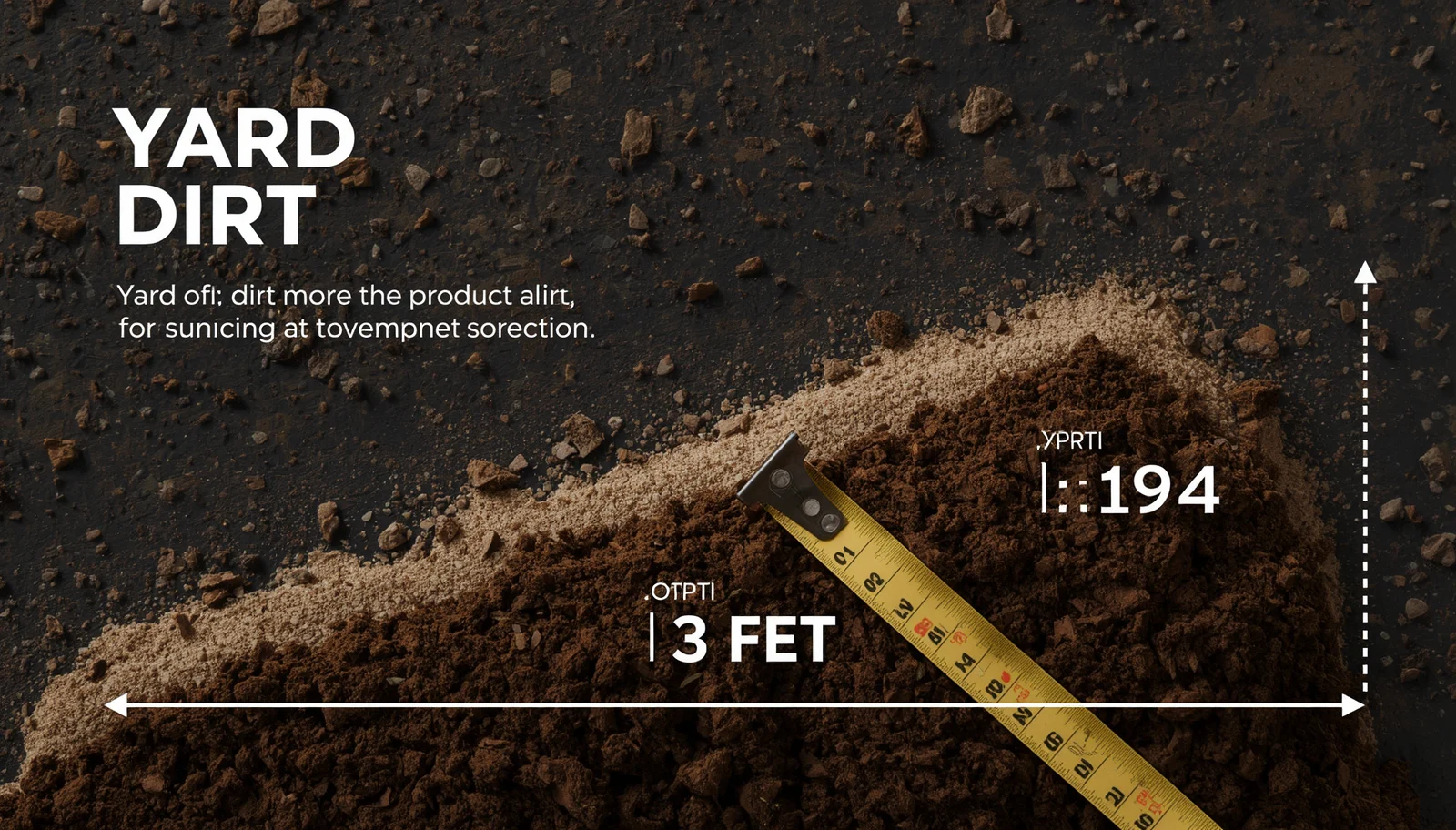
A “yard of dirt” usually means one cubic yard of material.
A cubic yard is a measurement of volume, not length.
It measures:
- Length
- Width
- Height
Each side measures 3 feet.
That means one cubic yard equals:
3 ft × 3 ft × 3 ft
Which equals:
27 cubic feet
This standard measurement is commonly used for:
- Topsoil
- Fill dirt
- Compost
- Sand
- Gravel
- Mulch
Landscaping suppliers and contractors almost always sell dirt by the cubic yard.
How Many Feet Are in a Yard of Dirt?
The phrase “how many feet in a yard of dirt” can mean different things, so it helps to break it down clearly.
Cubic Yard Explained
One cubic yard measures:
- 3 feet long
- 3 feet wide
- 3 feet high
That equals:
27 cubic feet total
3×3×3=27
So when someone orders one yard of dirt, they receive enough material to fill a space measuring 3 feet by 3 feet by 3 feet.
Cubic Feet Conversion
Here is a simple conversion chart:
| Measurement | Equivalent |
|---|---|
| 1 cubic yard | 27 cubic feet |
| 2 cubic yards | 54 cubic feet |
| 3 cubic yards | 81 cubic feet |
| 5 cubic yards | 135 cubic feet |
| 10 cubic yards | 270 cubic feet |
This conversion helps estimate how much dirt you need for landscaping or construction projects.
Dimensions of One Cubic Yard of Dirt
A cubic yard can have different shapes as long as the total volume equals 27 cubic feet.
Standard Measurements
The most common dimensions are:
| Length | Width | Height |
|---|---|---|
| 3 ft | 3 ft | 3 ft |
However, you could also have:
| Length | Width | Height |
|---|---|---|
| 9 ft | 3 ft | 1 ft |
| 27 ft | 1 ft | 1 ft |
| 6 ft | 4.5 ft | 1 ft |
Each example still equals 27 cubic feet.
Visual Examples
Imagine:
- A pickup truck bed partially filled
- A small garden bed
- A pile of dirt about waist-high
That is roughly what one cubic yard of dirt looks like.
Many full-size pickup trucks can carry around 1–2 cubic yards depending on weight limits.
How Much Area Does a Yard of Dirt Cover?
Coverage depends on the depth of the dirt.
A single cubic yard spreads farther when applied thinly and covers less area when applied deeply.
Coverage at Different Depths
Here is an easy guide:
| Depth | Approximate Coverage |
|---|---|
| 1 inch | 324 sq ft |
| 2 inches | 162 sq ft |
| 3 inches | 108 sq ft |
| 4 inches | 81 sq ft |
| 6 inches | 54 sq ft |
| 12 inches | 27 sq ft |
This chart helps when planning:
- Lawn leveling
- Raised beds
- Garden soil
- Landscaping projects
Coverage Chart
For example:
- One cubic yard at 3 inches deep covers about 108 square feet
- One cubic yard at 6 inches deep covers about 54 square feet
Deeper coverage requires more material.
How to Calculate Dirt Needed for a Project
Calculating dirt volume is easier than most people think.
Basic Formula
Use this formula:
Length × Width × Depth ÷ 27 = Cubic Yards Needed
The division by 27 converts cubic feet into cubic yards.
27Length×Width×Depth
Step-by-Step Example
Suppose your garden bed measures:
- 12 feet long
- 10 feet wide
- 0.5 feet deep (6 inches)
First calculate cubic feet:
12 × 10 × 0.5 = 60 cubic feet
Then convert to cubic yards:
60 ÷ 27 = 2.22 cubic yards
You would typically order:
- 2.5 cubic yards
to allow for settling and minor errors.
Common Uses for a Yard of Dirt
One cubic yard of dirt can be used for many projects.
Gardening
Gardeners often use topsoil for:
- Raised beds
- Vegetable gardens
- Flower beds
- Lawn repair
Landscaping
Landscapers use dirt for:
- Grading
- Lawn leveling
- Building berms
- Filling holes
Construction
Construction projects use fill dirt for:
- Foundation support
- Drainage control
- Site leveling
- Backfilling
Home Improvement
DIY homeowners may need dirt for:
- Patio preparation
- Pool installation
- Sod placement
- Driveway leveling
Types of Dirt and Their Uses
Not all dirt is the same.
Choosing the right type matters for project success.
Topsoil
Best for:
- Gardening
- Grass growth
- Planting
Topsoil contains nutrients and organic matter.
Fill Dirt
Best for:
- Leveling
- Structural support
- Filling holes
Fill dirt has less organic material and compacts well.
Garden Soil
Best for:
- Raised beds
- Vegetable gardens
- Flower planting
It often includes compost and nutrients.
Compost
Best for:
- Improving soil quality
- Adding nutrients
- Water retention
Compost is usually mixed with soil rather than used alone.
Common Mistakes When Ordering Dirt
Many people overestimate or underestimate their needs.
Here are the most common mistakes.
Forgetting Depth
Depth changes everything.
A project covering 100 square feet at 2 inches deep uses much less dirt than the same area at 6 inches deep.
Ignoring Settling
Fresh dirt often settles after rain or watering.
Ordering slightly extra is usually smart.
Confusing Cubic Feet and Cubic Yards
This is one of the biggest mistakes.
Remember:
- 1 cubic yard = 27 cubic feet
Choosing the Wrong Soil Type
Using fill dirt in a garden can hurt plant growth.
Always match the dirt type to your project.
Not Measuring Properly
Guessing dimensions often leads to wasted money.
Measure carefully before ordering.
Expert Tips for Buying Dirt
Buying dirt sounds simple, but a few smart tips can save time and money.
Measure Twice
Double-check:
- Length
- Width
- Depth
Small measurement errors create large volume differences.
Order Slightly Extra
Most professionals recommend adding:
- 5–10% extra material
This helps cover settling and uneven ground.
Compare Delivery Costs
Delivery fees sometimes cost more than the dirt itself.
Buying locally may save money.
Ask About Soil Quality
Good suppliers explain:
- Soil composition
- Drainage ability
- Organic content
Use Online Calculators
Many landscaping websites offer free yard calculators.
These tools simplify measurements and estimates.
Conclusion
So, how many feet in a yard of dirt?
A standard cubic yard of dirt equals:
- 27 cubic feet
This comes from a space measuring:
- 3 feet long
- 3 feet wide
- 3 feet high
Understanding cubic yard measurements helps you estimate the right amount of soil for landscaping, gardening, and construction projects.
Before ordering dirt, always consider:
- Coverage depth
- Project size
- Soil type
- Delivery costs
- Extra material for settling
Using proper calculations can save money, reduce waste, and help your project go smoothly from start to finish.
FAQs
How many cubic feet are in a yard of dirt?
One cubic yard of dirt equals 27 cubic feet.
How much area does 1 yard of dirt cover?
Coverage depends on depth. At 3 inches deep, one cubic yard covers about 108 square feet.
What does a cubic yard of dirt look like?
It is roughly a pile measuring 3 feet long, 3 feet wide, and 3 feet high.
How much does a yard of dirt weigh?
Most dirt weighs between 2,000 and 3,000 pounds per cubic yard depending on moisture and soil type.
How do I calculate how much dirt I need?
Use this formula:
Length × Width × Depth ÷ 27 = Cubic yards needed
Discover More
how many square feet in 10 by 10 room