

If you’re planning a vehicle wrap project, one of the first questions you’ll ask is:
how many feet of vinyl to wrap a car?
Whether you’re wrapping a sedan, SUV, truck, or sports car, knowing the correct vinyl amount helps you:
- Avoid overspending
- Prevent running short during installation
- Reduce waste
- Achieve professional-looking results
The short answer is:
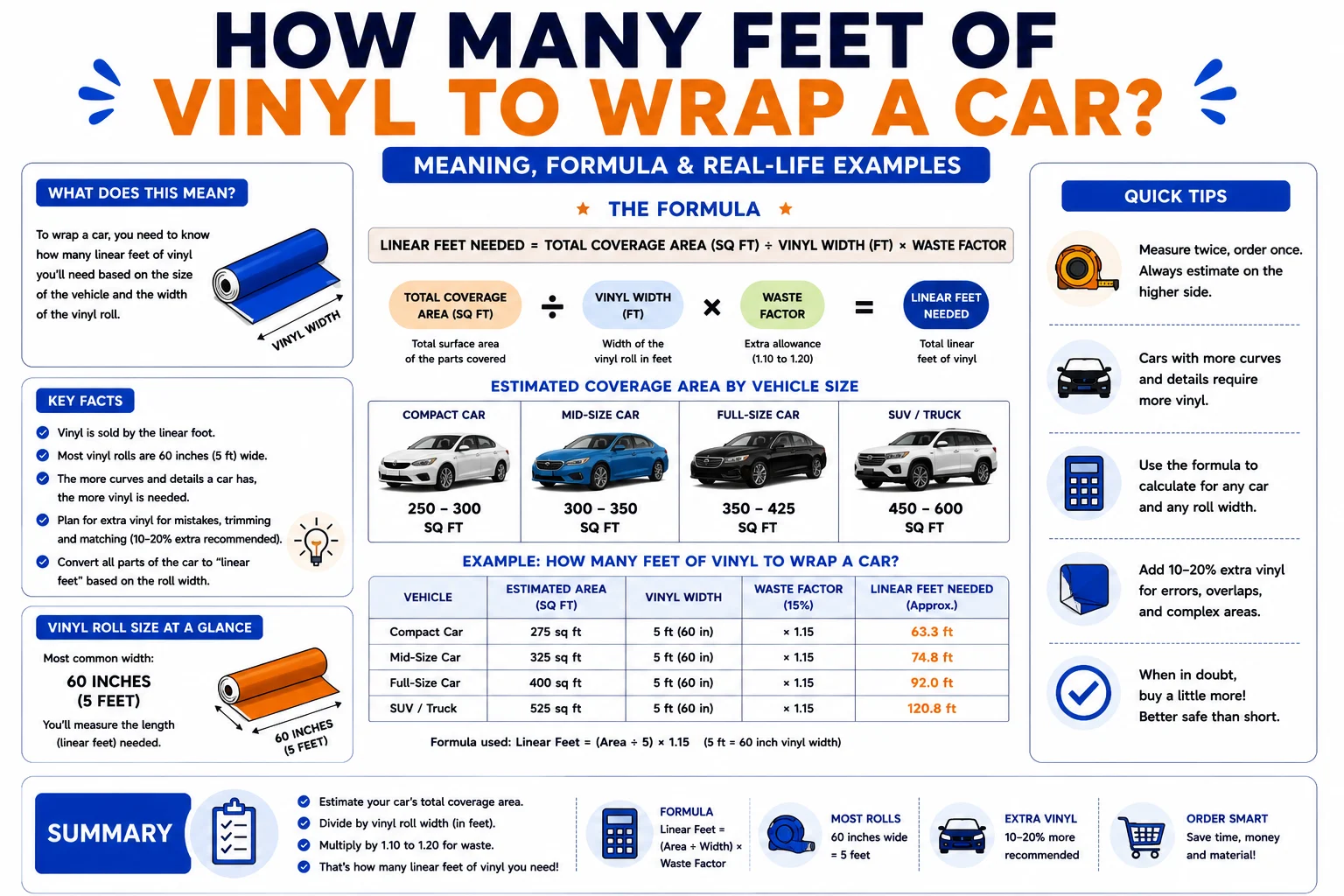
👉 Most cars need 50 to 75 feet of vinyl wrap
However, the exact amount depends on:
- Vehicle size
- Wrap type
- Vinyl roll width
- Design complexity
- Installation skill level
In this complete guide, you’ll learn:
- Standard vinyl measurements
- Wrap size charts
- How to calculate vinyl needs
- Costs and waste estimates
- Expert installation tips
Quick Answer: Vinyl Needed to Wrap a Car
For most vehicles:
| Vehicle Type | Approximate Vinyl Needed |
|---|---|
| Small car | 50–55 ft |
| Sedan | 55–60 ft |
| Coupe | 50–60 ft |
| SUV | 60–75 ft |
| Pickup truck | 65–75 ft |
| Large van | 75–100 ft |
Most wrap installers buy:
- A roll measuring about 5 feet wide
- And 50–75 feet long
A common full wrap size is:
5 ft×60 ft
Understanding Car Wrap Vinyl Sizes
Vinyl wrap material usually comes in large rolls.
Standard Vinyl Roll Widths
Most professional wrap vinyl rolls are:
- 5 feet wide
- Or 60 inches wide
This width covers:
- Doors
- Roofs
- Hoods
- Large body panels
without seams.
Common Vehicle Types
Different vehicles require different amounts of material.
Small compact cars need much less vinyl than:
- SUVs
- Vans
- Lifted trucks
How Many Feet of Vinyl to Wrap a Car Exactly
There’s no single answer for every vehicle.
However, most full wraps fall into these ranges:
| Vehicle | Typical Vinyl Length |
|---|---|
| Smart car | 40–45 ft |
| Compact sedan | 50–55 ft |
| Mid-size sedan | 55–60 ft |
| Sports car | 50–60 ft |
| SUV | 60–70 ft |
| Pickup truck | 65–75 ft |
| Commercial van | 75–100 ft |
Professional installers usually buy extra material for:
- Mistakes
- Curves
- Repositioning
- Trimming
Car Wrap Vinyl Size Chart
Use this quick reference guide.
| Vehicle Type | Recommended Vinyl Roll |
|---|---|
| Compact car | 5 ft × 50 ft |
| Sedan | 5 ft × 60 ft |
| SUV | 5 ft × 65 ft |
| Truck | 5 ft × 75 ft |
| Van | 5 ft × 100 ft |
How to Measure a Car for Vinyl Wrap
Measuring correctly helps prevent costly mistakes.
Step 1: Measure Vehicle Length
Measure bumper to bumper.
Step 2: Measure Width
Include mirrors if wrapping them.
Step 3: Measure Height
Measure from ground to roofline.
Step 4: Add Extra Material
Professionals usually add:
- 10–20% extra vinyl
for trimming and errors.
Step-by-Step Vinyl Calculation Formula
A basic formula is:
Vehicle Length×3
This gives a rough estimate for vinyl length.
Example Calculation
A sedan measuring:
- 16 feet long
Calculation:
16×3=48
👉 Estimated vinyl needed = about 48 feet
Then add extra for waste:
- Final estimate = 55–60 feet
Vinyl Requirements by Vehicle Type
Small Cars
Compact vehicles need:
- 50–55 feet
Sedans
Most sedans use:
- 55–60 feet
SUVs
Larger body panels increase vinyl use:
- 60–75 feet
Pickup Trucks
Truck beds and larger panels require:
- 65–75 feet
Vans
Commercial vans may need:
- Up to 100 feet
Factors That Affect Vinyl Usage
Several things impact how much vinyl you’ll need.
Vehicle Shape
Complex curves require extra material.
Wrap Experience
Beginners waste more vinyl than professionals.
Matte vs Gloss Vinyl
Some finishes are harder to install.
Printed Wrap Designs
Graphics and patterns require additional alignment space.
Door Jamb Wrapping
Wrapping inside edges uses more material.
Full Wrap vs Partial Wrap
Full Wrap
Covers:
- Entire vehicle exterior
Requires the most vinyl.
Partial Wrap
Covers only:
- Hood
- Roof
- Side panels
- Racing stripes
Uses much less material.
Example:
- Roof wrap may only need 5–10 feet
Common Mistakes When Buying Vinyl
Avoid these common problems.
Buying Too Little Vinyl
Running short creates:
- Color mismatch risks
- Installation delays
Ignoring Waste
Always add extra material.
Choosing Cheap Vinyl
Low-quality vinyl:
- Shrinks faster
- Fades sooner
- Tears more easily
Forgetting Complex Areas
Mirrors, bumpers, and curves require additional vinyl.
Tips for Successful Vinyl Wrapping
Clean the Vehicle Thoroughly
Dust and grease affect adhesion.
Work Indoors
Wind and dirt complicate installation.
Use Heat Properly
Heat helps vinyl stretch around curves.
Buy Extra Material
Extra vinyl helps fix mistakes later.
Use Quality Tools
Professional tools improve results.
Cost of Vinyl Wrap Material
Vinyl wrap pricing depends on:
- Brand
- Finish
- Thickness
- Vehicle size
Average material costs:
- Small car: $300–$500
- Sedan: $400–$700
- SUV/truck: $500–$900
Luxury finishes cost more.
Benefits of Wrapping a Car
Car wraps offer several advantages.
Paint Protection
Vinyl protects factory paint from:
- UV damage
- Minor scratches
- Road debris
Style Customization
You can choose:
- Matte finishes
- Gloss colors
- Satin textures
- Carbon fiber looks
Removable Finish
Wraps can be removed later without repainting.
Lower Cost Than Paint
Wraps are often cheaper than premium paint jobs.
Why Accurate Vinyl Estimates Matter
Correct calculations help you:
- Save money
- Avoid delays
- Reduce waste
- Achieve cleaner installations
Professional planning always improves final results.
Conclusion
So, how many feet of vinyl to wrap a car?
👉 Most vehicles require:
- 50 to 75 feet of vinyl wrap
Smaller cars use less, while:
- SUVs
- Trucks
- Vans
need significantly more material.
Before buying vinyl, always:
- Measure carefully
- Add extra for waste
- Consider vehicle curves and complexity
- Choose high-quality wrap film
Proper planning helps you achieve a cleaner, more professional-looking wrap while avoiding costly mistakes.
FAQs
1. How many feet of vinyl do I need for a sedan?
Most sedans require about 55–60 feet of vinyl.
2. What size vinyl roll is standard for car wraps?
Most wrap rolls are 5 feet wide.
3. Should I buy extra vinyl for mistakes?
Yes, adding 10–20% extra is recommended.
4. How much vinyl does an SUV need?
Most SUVs need 60–75 feet of vinyl.
5. Is wrapping a car cheaper than repainting?
In many cases, yes. Vinyl wraps are often less expensive than high-quality paint jobs.